 Dear Reader,
established database technologies such as IBM IMS/DB, IBM Db2, Oracle, or Adabas were long considered unbeatable in terms of reliability and data throughput. Today, however, modern and more cost-effective technologies (e.g., PostgreSQL) are capable of competing with these long-standing industry leaders. But how can an organization transition to a new technology - or consolidate multiple DBMS platforms - when these are deeply embedded in critical existing applications, potentially even requiring a fundamental paradigm shift? Furthermore, how can the effort and risk involved in such an undertaking be kept to a minimum? Is it possible to carry out such a migration without disrupting the ongoing development, maintenance, or daily operation of the applications?
We will explore these questions and more in our webinar, "Database Migration: You Have a Plan - What Comes Next?" taking place on January 21, 2027. We would be delighted if you could join us.
We have already demonstrated in several projects that this approach works in practice, not just on paper. A recent example: for an institution in the financial sector, we conducted a preliminary study and a proof of concept, demonstrating that IBM IMS/DB databases can be migrated to IBM Db2 in an automated, production-ready manner.
Read about how our colleague Hans Nickessen first encountered IMS/DB nearly 30 years ago - and how the "circle of life" has truly come full circle.
Additionally, this year marks the 50th anniversary of Delta ADS. As it remains in active, intensive use today, we will continue to offer training courses on ADS throughout the coming year.
We hope you enjoy reading this,
Your Delta Software Technology Team
 Successful Migration from IMS/DB to Db2 using an automated Transformation Factory
A financial sector institution has demonstrated, through a preliminary study and a proof of concept, that IBM IMS/DB databases can be migrated to IBM Db2 in an automated, production-ready manner - at project costs approximately 35% lower than those of a manual migration.
For decades, the financial institution has run mission-critical applications based on approximately 450 active and inactive IBM IMS databases. High costs, a dwindling pool of specialized expertise, significant complexity, and the need to maintain two parallel database environments have made a replacement necessary. Given that previous manual migrations proved extremely labor-intensive, the company sought a cost-effective, low-risk approach for a phased modernization toward Db2.
Read the report here:
Successful Migration from IMS/DB to Db2 using an automated Transformation Factory
Successful Migration from IMS/DB to Db2 using an automated Transformation Factory
A financial sector institution has demonstrated, through a preliminary study and a proof of concept, that IBM IMS/DB databases can be migrated to IBM Db2 in an automated, production-ready manner - at project costs approximately 35% lower than those of a manual migration.
Initial Situation
For several decades, the financial Institution has operated business-critical applications based on IMS Database (IMS/DB). In total, approximately 50 active databases are used by around 600 COBOL and PL/I programs. Furthermore, there are about 400 databases that are no longer in use but are still referenced within the source code.
In addition to high annual licensing costs, the growing scarcity of IMS/DB expertise, significant technological complexity, and the need to maintain two separate database environments posed a strategic challenge. Previous manual replacement projects had demonstrated that traditional migration approaches entail a substantial investment of effort: converting just five databases in one area required approximately 1,800 person-days.
Against this backdrop, the company sought an economical and low-risk way to gradually modernize its IMS/DB landscape by transitioning toward Db2.

Target
Together with the client, SQ Solutions, and Delta Software Technology, a preliminary study and a subsequent Proof of Concept (PoC) were conducted. The objective was to evaluate the automated transformation from IMS/DB to Db2 using the AMELIO Modernization Platform, while assessing whether the implementation was technically feasible and economically sound.
The focus was on:
- Analysis of the existing IMS/DB landscape
- Development of a robust business case
- Evaluation of potential migration strategies
- Assessment of whether Delta’s proven "factory" approach, aimed at achieving the highest possible level of automation, can be applied
- Demonstration of technical feasibility via a PoC
Procedure
Assessment
As part of the preliminary study, the existing system landscape was analyzed and evaluated in terms of complexity, database structures, and program dependencies. For the migration from IMS/DB to Db2, Delta offers a scalable factory approach that has already proven successful in other projects. The preliminary study examined whether this approach could also be applied to the client, as well as what adjustments would be necessary to meet the bank's specific requirements and guidelines.
Proof of Concept
Based on these results, the factory was set up and - together with SQ - applied to a selected subset in order to demonstrate the technical feasibility and the quality of the automated transformation:
The PoC confirmed the technical feasibility of the factory approach. The automated transformation process was able to carry out the migration task in a reproducible manner and to a high standard of quality, resulting in a solution ready for production. Furthermore, the databases that were automatically converted during the PoC, along with the corresponding transformed programs, have since been deployed into the production environment, where they are currently in active use:
- A proposal for the Db2 model was derived from the established IMS/DB model and coordinated with the client.
- The relevant sections of the source code were transformed in an automated, rule-based manner using the factory.
- A custom-tailored data transformation was generated for the data migration.
- Finally, the results were evaluated in terms of functionality, performance, and maintainability.
Project Results
The PoC confirmed the technical feasibility of the factory approach. The automated transformation process was able to carry out the migration task in a reproducible manner and to a high standard of quality, resulting in a solution ready for production. Furthermore, the databases that were automatically converted during the PoC, along with the corresponding transformed programs, have since been deployed into the production environment, where they are currently in active use.
The preliminary study also demonstrated that significant savings can be achieved compared to an approach based exclusively on manual implementation:
- Reduction of estimated project costs by approximately 35%
- Reduction of total effort through automation of the transformation
- Standardized and reproducible migration processes
- Reduction of project and operational risks
- Design of a modern and future-proof database platform based on Db2
A sustainable economic benefit has been identified: it is possible to save on the very high annual licensing costs. In addition, there are advantages resulting from a reduction in administrative overhead, decreased reliance on specialized IMS/DB expertise, and the opportunity to make greater use of modern technologies and more cost-effective zIIP processors.
Client Benefit
With the preliminary study and the successful PoC, the organization now has a solid foundation for the strategic replacement of its IMS/DB landscape.
- Successful demonstration of technical feasibility
- Significant reduction in effort and costs compared to conventional migration approaches
- Minimizing operational risks through standardized and automated processes
- Long-term preservation of maintainability and expertise
- Technological foundation for future modernization projects
"The joint preliminary study and the successful proof of concept have demonstrated that migrating a complex IMS/DB environment to Db2 is both economically and technically feasible using an industrialized factory approach. By combining automation, standardized processes, and in-depth analysis, a robust path for the long-term modernization of a mainframe landscape has been identified."
Conclusion
The preliminary study conducted jointly by SQ Solutions and Delta Software Technology, along with a successful proof of concept (PoC), has laid the foundation for the strategic modernization of an established IMS/DB environment. The factory approach developed, utilizing the AMELIO Modernization Platform, enables a significant reduction in costs, risks, and the effort required for project execution and testing, while simultaneously providing a clear path toward future consolidation on Db2. These results thus offer a robust basis for decision-making regarding the further implementation of a transformation program.
 About SQ-Solutions
Innovative IT consultancy with over 10 years’ experience in the field of mainframe application modernisation. A hybrid approach combining the latest research with many years of project experience.
Download Success Story
Download Language: Englisch - Version: mt21108-01

A financial sector institution has demonstrated, through a preliminary study and a proof of concept, that IBM IMS/DB databases can be migrated to IBM Db2 in an automated, production-ready manner - at project costs approximately 35% lower than those of a manual migration.
For decades, the financial institution has run mission-critical applications based on approximately 450 active and inactive IBM IMS databases. High costs, a dwindling pool of specialized expertise,
... Read more
Further Information
Here you can find more articles on the subject:
- Provinzial realizes complete migration from IBM IMS/DB to IBM Db2 with Delta
- Automatically replacing IBM IMS/DB
- Successfully Replace IMS Databases
- IBM IMS/DB? Modernization Now!
- Modernization Project at BSQ Bauspar AG
Download Language: Deutsch - Version: MT11082.01
IMS-Datenbanken sicher ablösen: So gelingt es!
Read more
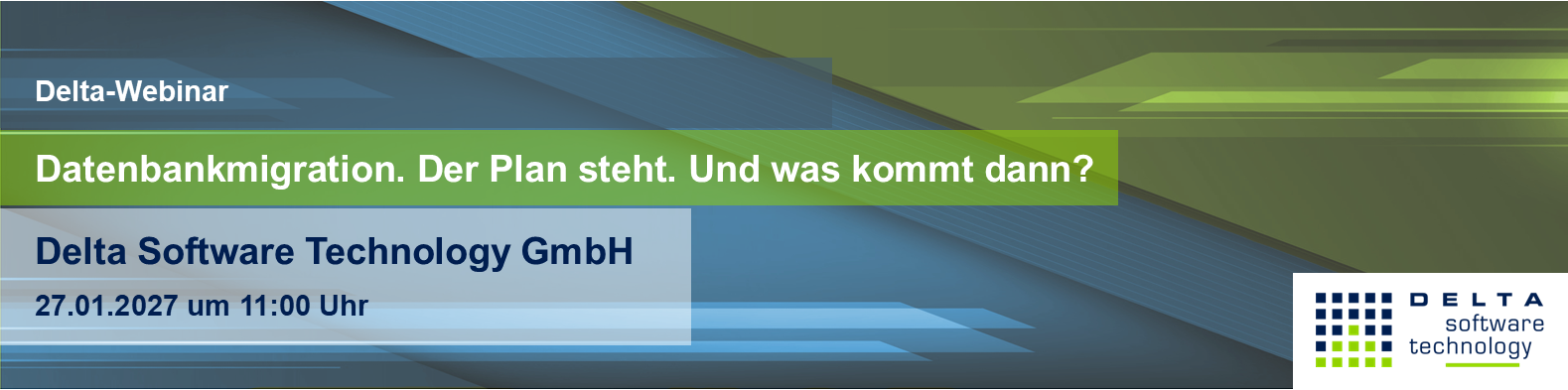 Webinar: Database Migration. The Plan is in Place - what comes next?
You are looking to replace your existing database solution. Which target platform have you chosen?
Whether you are migrating from IBM IMS, IBM Db2, Oracle, PostgreSQL, or another RDBMS, we can get you there - fully automated.
We would like to invite you to our webinar on January 27, 2027, at 11:00 AM CET. (only in german)
Databases form the backbone of every modern business application. They are the prerequisite for flexible data analysis; the stored data serves as the foundation for business decisions, and the speed at which analyses can be performed directly influences the scope of your decision-making options. Migrating critical legacy data, databases, and their closely integrated applications to modern SQL databases paves the way for flexible data utilization.
With the AMELIO Modernization Platform, we support the modernization of a wide variety of database systems, offering a migration solution.
Sign up here now:
Webinar: Database Migration. The Plan is in Place - what comes next?
Webinar: Database Migration. The Plan is in Place - what comes next?
Database Migration. The Plan is in Place - what comes next?
You are looking to replace your existing database solution. Which target platform have you chosen?
Whether you are migrating from IBM IMS, IBM Db2, Oracle, PostgreSQL, or another RDBMS, we can get you there - fully automated.
We would like to invite you to our webinar on January 27, 2027, at 11:00 AM CET. (only in german)

Databases form the backbone of every modern business application. They are the prerequisite for flexible data analysis; the stored data serves as the foundation for business decisions, and the speed at which analyses can be performed directly influences the scope of your decision-making options. Migrating critical legacy data, databases, and their closely integrated applications to modern SQL databases paves the way for flexible data utilization.
With the AMELIO Modernization Platform, we support the modernization of a wide variety of database systems, offering a migration solution that:
- executes all changes 100% automatically - and error-free
- achieves a true transformation - ensuring that legacy DBMS paradigms are not carried over into the new environment
- creates no dependencies (zero footprint)
- reduces testing efforts cost-effectively - utilizing "meta-testing"
- allows for uninterrupted ongoing development and maintenance
- remains flexible, even allowing for a change in strategy during the migration process.
We look forward to welcoming you to this webinar, which will last approximately 45 minutes.
 The famous Circle of Life happens every now and then.
Hans Nickessen shares stories from his professional life:
Whether a customer chooses Db2, Oracle, PostgreSQL, or another relational database as their new platform, switching from IBM IMS/DB to an RDBMS is a paradigm shift. It doesn't just affect data storage; it impacts the entire program logic for data access across all applications. Alongside automated data transformation, comprehensive program modifications are required all while keeping functionality, interfaces, and data structures strictly intact. This is precisely where the AMELIO Modernization Platform comes into play.
Read his report here:
The famous Circle of Life happens every now and then.
The famous Circle of Life happens every now and then.
On May 4, 1998, I started my mainframe career. I was 32 years old, and my first day at Landmark Systems (maker of the excellent TMON products) was filled with onboarding, setting up my workspace, and getting organized. My background as a Gupta-SQLBase database developer had left me fairly unprepared for the MVS/OS/390 world of that era.
A few days after starting, an American colleague held a product training session on TMON for IMS. There was a lot of tech talk and complex details, and I was just hoping nobody would notice how little I knew. But it was a single sentence at the end of the presentation that made me reflect on that time today: "We think IMS will disappear from the market within the next 10 years."
Aha. Okay. Noted.
As it turned out, we sold a significant number of IMS monitors back then. Performance management for such complex and powerful database technology was a major, mission-critical effort at the time.
Those predicted 10 years eventually turned into nearly 30. Today, however, the market has finally reached the point where IMS is clearly reaching the end of its lifespan. That is the clear consensus we hear across our numerous customer interactions and industry events.
And whether by chance or fate, my journey has brought me to a place where replacing an IMS installation doesn't have to turn into a never-ending story - a place where quality and customer needs are top priorities. Best of all, this "decommissioning" of IMS is fully automated.
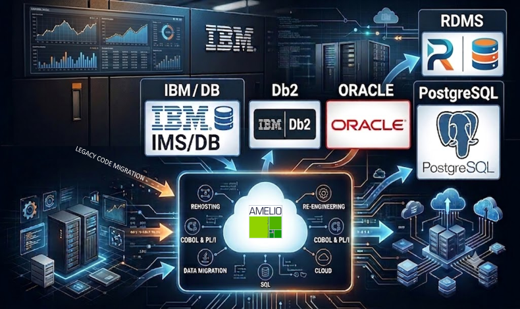 Whether a customer chooses Db2, Oracle, PostgreSQL, or another relational database as their new platform, switching from IBM IMS/DB to an RDBMS is a paradigm shift. It doesn't just affect data storage; it impacts the entire program logic for data access across all applications. Alongside automated data transformation, comprehensive program modifications are required all while keeping functionality, interfaces, and data structures strictly intact. This is precisely where the AMELIO Modernization Platform comes into play.
Key Benefits of the AMELIO Modernization Platform:
- Complete Replacement: Total decommission of IMS/DB.
- No Code Freeze & Maximum Security: Ensures business continuity during the transition.
- Flexibility: Avoids a hard "Point of No Return."
- Compliance & Financial Safety: Fully audit-proof, no hidden follow-up costs, no vendor lock-in, and no residual software footprint.
- Tailored Execution: Delivered as a customer-specific solution within budget at a fixed price.
Learn More: A Real-World Case Study
Provinzial achieves complete migration from IBM IMS/DB to IBM Db2 with Delta
Using our tools and services, Provinzial Rheinland successfully completed an automated, full application and data migration from IBM IMS/DB to IBM Db2.
https://delta-software.com/link.php?en=0329
If you are currently facing the challenge of an IMS legacy replacement, I would be delighted to connect!
 New Delta Training Courses: Register Now
Anyone using tools to automate software development needs in-depth knowledge of the methods, modes of operation, and capabilities of the tools. And not just "in principle", but in relation to the concrete environment and task.
Our training courses and workshops help you to use Delta tools efficiently and to optimise the development of your applications: Practice-oriented and taking into account your main areas of interest.
ADS Basics - ADS for Administrators - ADS Refresher - ADS on Eclipse - ADS What's new
Or contact us to discuss your requirements for a customised training.
Learn more about our trainings and workshops …
New Delta Training Courses: Register Now
New Delta Training Courses: Register Now
Anyone using tools to automate software development needs in-depth knowledge of the methods, modes of operation, and capabilities of the tools. And not just "in principle", but in relation to the concrete environment and task.
Our training courses and workshops help you to use Delta tools efficiently and to optimise the development of your applications: Practice-oriented and taking into account your main areas of interest.
ADS Basics - ADS for Administrators - ADS Refresher - ADS on Eclipse - ADS What's new
 Here you will find the new dates:
- 02.03.-04.03.2027 and 14.09.-16.09.2027 - ADS Basics
- 09.03.-11.03.2027 and 21.09.-23.09.2027 - ADS for Administrators
- 16.03.-17.03.2027 and 28.09.-29.09.2027 - ADS Refresher
- 13.04.-14.04.2027 and 05.10.-06.10.2027 - ADS on Eclipse
- 20.04.2027 and 12.10.2027 - ADS What’s new
- 27.04.2027 and 19.10.2027 - Delta DETAB
Learn more about our trainings and workshops ...
Contact us to discuss your requirements for a customised training.
 50 Years of Delta ADS - And how it started
This year, 2026, we celebrate 50 years of Delta ADS. In this years newsletters we will look back on the history of Delta ADS and reflect on its features that have contributed to its long lasting success.
50 Years of Delta ADS - And how it started
50 Years of Delta ADS - And how it started
Delta ADS turns 50
Developing software is looking to the future, but sometimes it is good to turn around and look back.
As we did, we discovered that the foundations of our products were made almost half a century ago.

Delta ADS - Review
This year, 2026, we celebrate 50 years of Delta ADS. In this years newsletters we will look back on the history of Delta ADS and reflect on its features that have contributed to its long lasting success.
Half a century ago, programming a computer was a special kind of magic for most people. It also was an individual and very creative process with pen, paper and punch cards. Getting complex programs functioning correctly was a difficult and time-consuming process and came with considerable costs that did not allow for the compiler to be used for error finding.
The use of terminals to write programs was a big improvement in the development process. It provided a better overview of the program logic without having to compile and print a listing first. This overview was limited of course by the maximum of 24 lines a terminal was able to show at the same time. This was not sufficient for complex decisions which gave rise to the first tools to support the programming. Although such tools were available for many programming languages, the main field for these tools was in the area of the most widely used programming language for business applications: COBOL.
1971: The First Idea
 In 1971, Dr Reinhold Thurner of Zürich University published about the use of decision tables in the software development which led to DETAB/GT to generate the programming code based on a more abstract definition language . By 1976 DETAB/GT reached 100 installations, the same amount of installations was achieved by its competitor VORELLE2.
Generating a complex decision structure for COBOL programs was a great help, especially when keeping in mind that in these days COBOL statements were terminated by a single point and complex decisions could easily run over 24 lines of code. It also showed that effective programming needed more. A major step was not in the use of tools but in the way, programs were structured. In an environment dominated by card readers, tapes and report writers (hard disks were expensive and had only limited capacity), each program depended on the structure of the input and output data. The fact that each programmer used his or her personal style and creativity did not make the maintenance of these programs easy. Some kind of craftmanship and best practices was needed. This led to a number of Structured Programming initiatives. The most widely used was Jackson Structured Programming (JSP)3 that Michael Jackson published in 1975.
At the same time Dr. Thurner launched a generator system that, based on the principles of structured programming, was able to produce much of the needed code. It used an abstract description of the structure of the data, in a language specifically defined for that task. The product was called DELTA4. It solved the problem that Dijkstra addressed in 1968. The programmer did not need to program and maintain any GO TO statement, only the generator produced them for the executable program5.
Over the years, Delta (later called Delta/ADS) was extended with a number of standard generators for standard functionality in Business Programming. PSD (Program Schema Description) and GRU (Control Break Processing) helped programmers to keep an overview of their programs and to focus on the unique functionality they have to implement while not being bothered by mechanisms needed to implement it.
Platform independence - Thanks to Generators
A major step in the development of Delta ADS was the concept of platform independence by the use of generators and macros. Back in the old days, each mainframe (compiler) had its own deviations of the COBOL standard. A program written for platform A was thus not usable on platform B without changing the source code. Not a big deal if you develop your software inhouse for your own use but it is for a software supplier that wants to install his software on many platforms. The use of the generators and macros in Delta ADS to deal with the platform specific aspects of the implementation meant that a program for many different target platforms could be maintained in one single source code object.
Platform independence did not only benefit software suppliers but after some time many Delta ADS users discovered that this possibility also facilitated a platform migration. The fact that an existing application could be migrated easily to a new platform when using Delta ADS is an important reason why many installations are still actively used, some for over 40 years, and that Delta/ADS is still alive and kicking after 50 years.
“I am pleased that after 50 years, Delta ADS is still being used successfully
for the development and migration of large and complex applications.”
Dr. Reinhold Thurner

The Future - and beyond
Like Delta DETAB, Delta ADS for COBOL and PL/I remains a part of our product portfolio. Over the years an estimated 2+ billion unique lines of code have been generated with our generator system, a number that is still growing each year. Initially, DETAB and Delta ADS were only available for the platforms for which they generated code.
Today they are also integrated into modern development environments such as Eclipse or Visual Studio and can generate cross-platform.
 As the advantages of this generative approach to software development is still valued by our customers we remain committed to supporting them with our tools. The current release 6 of Delta ADS will certainly not be the last as we will continue to find solutions for the challenges our customers experience in their software development process.
50 Years of Delta ADS: Supporting the Developer
This year, 2026, we celebrate 50 years of Delta ADS. In our first retrospective we focussed on the techniques that played a big role in the area of code produce. Now we will look into another important part of Delta ADS, besides producing code: supporting the developer with tooling, prototyping, documentation and testing.
 The first domain that Delta ADS took care of is the production of documentation. During the generation process, a number of different sorts of documents can be produced. Depending on the Delta ADS processors used, e.g. a program flow chart is created, an overview of all available locations and their usage becomes available and, last but not least, SPP has the option of generation a Nassi-Shneiderman diagram of a SPP-routine.
All these features enabled the developer to check the actual program against the design he made. But being able to communicate with the end-user about the results of a program has always been an important but difficult issue. Results could only be shown after running the program which needed a functional program and available data. Adapting afterwards was a tedious and error prone process. Therefore, Delta ADS allows for prototyping of reports and screens which produce the simulated results during the program generation. This gives the feedback at a much earlier stage, reducing the effort to correct the implementation.
Correcting existing programs has always been an important, time consuming but undervalued part of a programmer’s job.
Delta’s founding father Dr. Reinhold Thurner already found out in an early stage that: ‘for the correction of an error, 20% of the effort is needed to determine that there is an error and to pass the issue to the correct people. Next, in terms of time consuming, is to find the component that causes the error. The effort needed to fix the error is very often limited (but as we are in a hurry we tend to introduce new errors)’.
In a time where interactive debuggers were not available, finding an error was often a case of inserting display statements in the code to see where the program was when the error occurred. After fixing the flaw, these display statements had to be removed again. When another error came up, this process had to be repeated again.
Using a generator for the code produce opened up a solution for this time-consuming process. By activating one of the TEST-options (for the complete program or just one SPP-routine), the program will protocol each passed SPP-construct. This gives the programmer the much-needed insight in what a program did at runtime (and much faster compared to debugging) without having to program display-statements for that.
Additionally it can also produce statistics showing what logic was executed during the test run, giving an idea about the validity of the test and about general test coverage.
From the start, Delta ADS aimed at supporting the programmer to produce structured, well documented and maintainable code. A mission that we, after 50 years, remain to continue.
History
Article from Computerwoche, January 10, 1975 - Delta Author Dr. Reinhold Thurner:
"Multifunktionales Generator-System für moderne Software-Technologie: Ein Superding für die Avantgarde"
Download Language: Englisch - Version: MT21094.01
Life starts at 40 something: Delta ADS turns 50 this year
Developing software is looking to the future, but sometimes it is good to turn around and look back. As we did, we discovered that the foundations of our products were made almost half a century ago.
Read moreSources
1 Thurner R., "Entscheidungs-Tabellen: Aufbau-Anwendung-Programmierung", VDI- Taschenbuch T33, VDI Verlag, Duesseldorf, 1971.
2 Jeweils 100mal installiert:: Vorelle und Detab/GT | Computerwoche, 02.07.1976
3 Jackson, MA (1975), Principles of Program Design, Academic.
4 Multifunktionales Generator-System für moderne Software-Technologie: Ein Superding für die Avantgarde | Computerwoche, 10.10.1975
5 Dijkstra, Edsger W. (March 1968). "Letters to the editor: Go to statement considered harmful" (PDF). Communications of the ACM. 11 (3): 147–148. doi:10.1145/362929.362947. ISSN 0001-0782. S2CID 17469809.
p. 147, "The unbridled use of the go to statement has as an immediate consequence that it becomes terribly hard to find a meaningful set of coordinates in which to describe the process progress. ... The go to statement as it stands is just too primitive, it is too much an invitation to make a mess of one's program."

Download Newsletter